The Revolutionary Guards: Architects of Iran's Future Leadership
Iran's political system is a tapestry woven with religious doctrine, revolutionary fervor, and strategic power plays. At its heart lies the Supreme Leader, the nation's ultimate authority, whose eventual succession is a matter of profound national and international consequence. While official bodies like the Assembly of Experts are constitutionally tasked with selecting the next leader, a more potent, often unseen, force orchestrates the process: the Islamic Revolutionary Guard Corps (IRGC). This elite military and ideological institution has evolved beyond its defense mandate to become the primary driver of Iran's leadership strategy, shaping not just who rules, but also the very direction of the Islamic Republic.
The recent intensification of discussions around leadership transition, particularly following the death of high-ranking officials or the anticipation of the Supreme Leader's succession, has brought the IRGC's influence into sharper focus. When a leader is lost, or the time for a new one approaches, the mechanisms driven by the Revolutionary Guards spring into action, ensuring that the chosen successor aligns perfectly with their vision for Iran.
Understanding Iran's Unique Power Structure and the Succession Challenge
To grasp the IRGC's pivotal role, one must first understand the intricacies of Iran's unique governance model, Velayat-e Faqih (Guardianship of the Islamic Jurist). This doctrine vests ultimate authority in a qualified cleric, the Supreme Leader, who holds sway over all major state affairs, military, judiciary, and foreign policy. Unlike conventional democracies, the Supreme Leader is not elected by popular vote but selected by the Assembly of Experts, an 88-member body of high-ranking clerics themselves elected by the public.
However, the democratic veneer often conceals a deeper, more complex reality. The candidates for the Assembly of Experts are first vetted by the Guardian Council, another powerful body whose members are appointed directly or indirectly by the Supreme Leader. This intricate web ensures that those who ultimately choose the Supreme Leader are ideologically aligned with the existing power structure. It is within this system that the Revolutionary Guards wield immense influence, effectively steering the composition and decisions of key institutions that determine the future of who rules Iran now.
- The Supreme Leader's Authority: Controls the armed forces, judiciary, state media, and appoints key officials.
- The Assembly of Experts: Officially responsible for selecting, supervising, and potentially dismissing the Supreme Leader.
- The Guardian Council: Vets all electoral candidates, including those for the Assembly of Experts, ensuring ideological conformity.
This layered structure makes the succession process less about a free choice and more about a carefully managed transition, with the IRGC at the helm of strategic orchestration.
The Revolutionary Guards: Beyond Military Might, Deep into Political Power
Founded in 1979 to protect the Islamic Revolution from internal and external threats, the IRGC has transformed into a sprawling, multi-faceted organization that far exceeds the scope of a traditional military force. It operates its own army, navy, air force, intelligence apparatus, and the Basij paramilitary volunteer force. Crucially, the IRGC also controls vast economic interests across various sectors, giving it significant financial leverage.
More importantly for iran leadership strategy, the IRGC sees itself as the ultimate guardian of the revolution's ideological purity and political trajectory. This self-appointed mission imbues it with a profound sense of responsibility for the nation's leadership continuity. Their influence permeates every aspect of Iranian society:
- Ideological Guardianship: The IRGC vets candidates for political office, influences media narratives, and suppresses dissent, ensuring a prevailing ideology compatible with their hardline principles.
- Economic Clout: Through myriad companies and foundations, the IRGC has a significant stake in key industries, giving it economic power that translates into political leverage.
- Intelligence & Security: Their extensive intelligence network allows them to monitor potential rivals, manage internal factions, and ensure stability during sensitive transitions.
- Loyalty to the Supreme Leader: The IRGC's chain of command bypasses the regular army and answers directly to the Supreme Leader, making them his primary instrument of power and ensuring their unwavering loyalty to the institution of the Supreme Leader, provided that leader upholds their revolutionary ideals.
When discussions of succession arise, whether due to the advanced age of the current Supreme Leader or the unexpected loss of other key figures, the IRGC's strategic planning apparatus is already in motion, ensuring that any new leader will uphold their vision for Iran.
Orchestrating the Succession: Mechanics and Motives
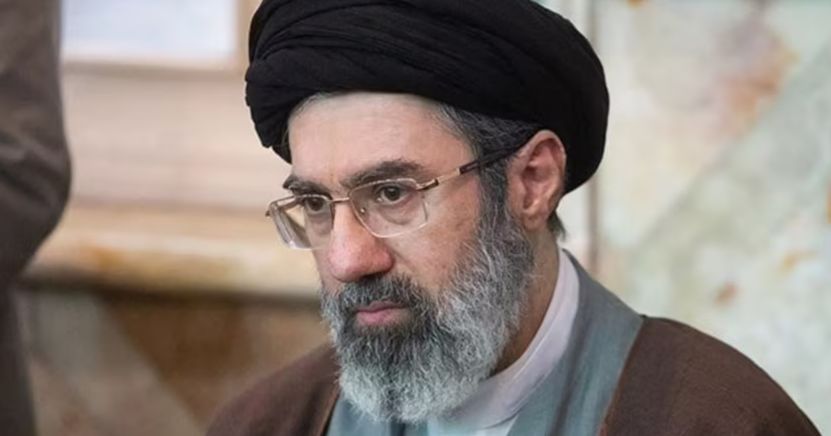
The notion that "a son has been chosen" to succeed a leader, as hinted at in some narratives, speaks volumes about the behind-the-scenes machinations. While a purely dynastic succession for the Supreme Leader is constitutionally unlikely, the influence of the current leader's inner circle, often aligned with the IRGC, can certainly guide the process towards a preferred candidate. This "chosen" individual would embody the ideological commitment, political savvy, and necessary rapport with the Guards to maintain the delicate balance of power.
The IRGC's strategy for leadership succession involves several key steps:
- Pre-emptive Vetting and Cultivation: Years before a succession event, potential candidates are discreetly assessed for their ideological purity, loyalty to the revolution, and alignment with the IRGC's strategic goals. Those deemed suitable may be promoted through various clerical or state positions.
- Influencing the Assembly of Experts: The IRGC, through its vast network and influence on the Guardian Council, ensures that the Assembly of Experts is largely comprised of clerics who share their conservative worldview. This limits the pool of potential candidates to those acceptable to the Guards.
- Managing Public Discourse: Through controlled media and ideological messaging, the IRGC helps shape public opinion around potential successors, elevating favored individuals and discrediting others.
- Ensuring Stability: During the sensitive period of transition, the IRGC's security apparatus is paramount in preventing internal dissent or external interference, ensuring a smooth handoff of power. Their Quds Force, for example, plays a vital role in projecting Iran's power regionally, solidifying the Guards' influence both domestically and abroad.
The Guards' primary motive is to safeguard the revolutionary principles upon which the Islamic Republic was founded and to protect their own extensive institutional interests. A Supreme Leader who diverges significantly from their hardline stance could jeopardize their power, wealth, and ideological standing. Therefore, an IRGC-driven succession guarantees continuity of their influence and the current conservative trajectory of the state.
The Far-Reaching Implications for Iran and Beyond
An IRGC-driven leadership succession carries significant implications, both domestically and internationally. For Iran, it typically signifies:
- Consolidation of Hardline Power: The selection of a candidate favored by the Guards ensures the continuation of conservative policies, potentially marginalizing reformist factions and restricting civil liberties further.
- Predictable Foreign Policy: While nuances may change, the core tenets of Iran's foreign policy – anti-Western sentiment, support for regional proxies, and the pursuit of nuclear capabilities – are likely to remain consistent under a Guard-backed leader. This predictability, however, often comes with increased regional tensions.
- Economic Challenges: The IRGC's deep involvement in the economy and its potential role in succession decisions can exacerbate issues like corruption and inefficiency, further hindering Iran's economic development, especially under the weight of international sanctions.
- Internal Stability vs. Dissent: While the IRGC's firm hand ensures a controlled transition, it also risks alienating segments of the population demanding greater freedoms and economic prosperity, potentially leading to future unrest.
For the international community, understanding the IRGC's central role in iran leadership strategy is crucial for predicting Iran's future trajectory. It signals a continuity of the existing power structure, which often translates into a continuation of policies that pose challenges to regional stability and global diplomacy.
Practical Insight: Observers tracking Iranian politics should focus less on the ceremonial aspects of succession and more on the internal power dynamics within the IRGC and its favored clerical networks. Statements from prominent IRGC commanders or influential figures within the Supreme Leader's office often provide more accurate indicators of potential successors than official pronouncements from the Assembly of Experts.
Conclusion
The Revolutionary Guards are not merely a military force; they are the ideological backbone and strategic architects of Iran's political future. Their pervasive influence in vetting, cultivating, and ultimately orchestrating the succession of the Supreme Leader makes them the de facto drivers of Iran leadership strategy. In a nation where ultimate power rests with a divinely chosen cleric, the Guards ensure that this choice aligns with their enduring vision for the Islamic Revolution. As Iran navigates the complexities of leadership transition, the watchful eye and firm hand of the Revolutionary Guards will continue to shape the destiny of the Islamic Republic, dictating its domestic policies and its posture on the global stage.